Table of Contents
- What Is the Economic Impact of NAFTA? | by EXIMA | Medium
- NAFTA Negotiations Set to Begin August 16 in Washington D.C. | KTLA
- NORTH AMERICA FREE TRADE AGREEMENT (NAFTA) - YouTube
- The Human World Chapter ppt download
- Nafta | PDF | North American Free Trade Agreement | Zapatista Army Of ...
- NAFTA pros and cons - netivist
- Expansion of North American Free Trade Agreement (NAFTA) - QS Study
- Nafta
- USHAP 2016-17: NAFTA and what are its affects
- 3 Things To Know About the 'New NAFTA' That Begins Today

Table of Contents
1. [Introduction to NAFTA](#introduction) 2. [History of NAFTA](#history) 3. [Key Provisions of NAFTA](#provisions) 4. [Benefits of NAFTA](#benefits) 5. [Challenges and Criticisms of NAFTA](#challenges) 6. [Impact of NAFTA on the US, Canada, and Mexico](#impact) 7. [NAFTA's Replacement: The United States-Mexico-Canada Agreement (USMCA)](#usmca) 8. [Conclusion](#conclusion)
Introduction to NAFTA
NAFTA was signed on December 17, 1992, and came into effect on January 1, 1994. The agreement aimed to create a trilateral trade bloc, eliminating tariffs and other trade barriers on most goods and services traded among the three countries. The agreement also established rules for investment, intellectual property, and dispute resolution.
History of NAFTA
The idea of a free trade agreement between the US, Canada, and Mexico dates back to the 1980s. The US and Canada signed a bilateral free trade agreement in 1988, which served as a precursor to NAFTA. The negotiations for NAFTA began in 1991, and the agreement was signed in 1992. The US Congress approved NAFTA in 1993, and the agreement came into effect in 1994.
Key Provisions of NAFTA
NAFTA has several key provisions, including: Elimination of tariffs on most goods and services Reduction of non-tariff barriers, such as quotas and licensing requirements Establishment of rules for investment, intellectual property, and dispute resolution Creation of a trilateral commission to oversee the implementation of the agreement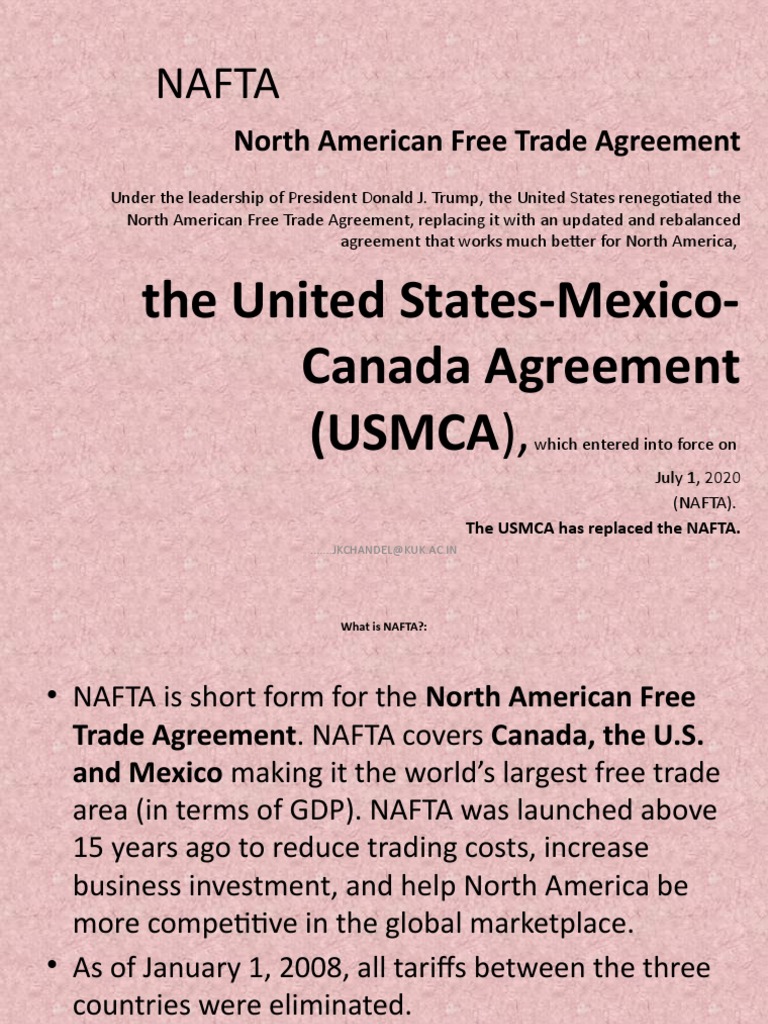
Benefits of NAFTA
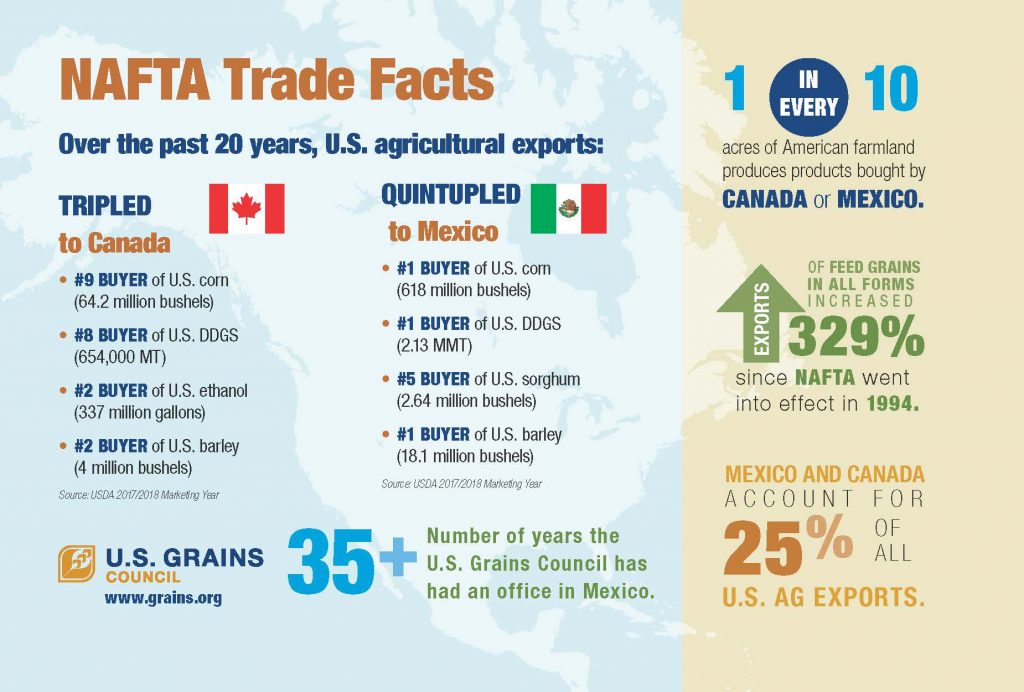
NAFTA has had several benefits for the participating countries, including: Increased trade: NAFTA has led to a significant increase in trade among the three countries, with the US, Canada, and Mexico becoming each other's largest trading partners. Job creation: NAFTA has created jobs in industries such as manufacturing, agriculture, and services. Economic growth: NAFTA has contributed to economic growth in the three countries, with the US, Canada, and Mexico experiencing increased GDP growth since the agreement came into effect.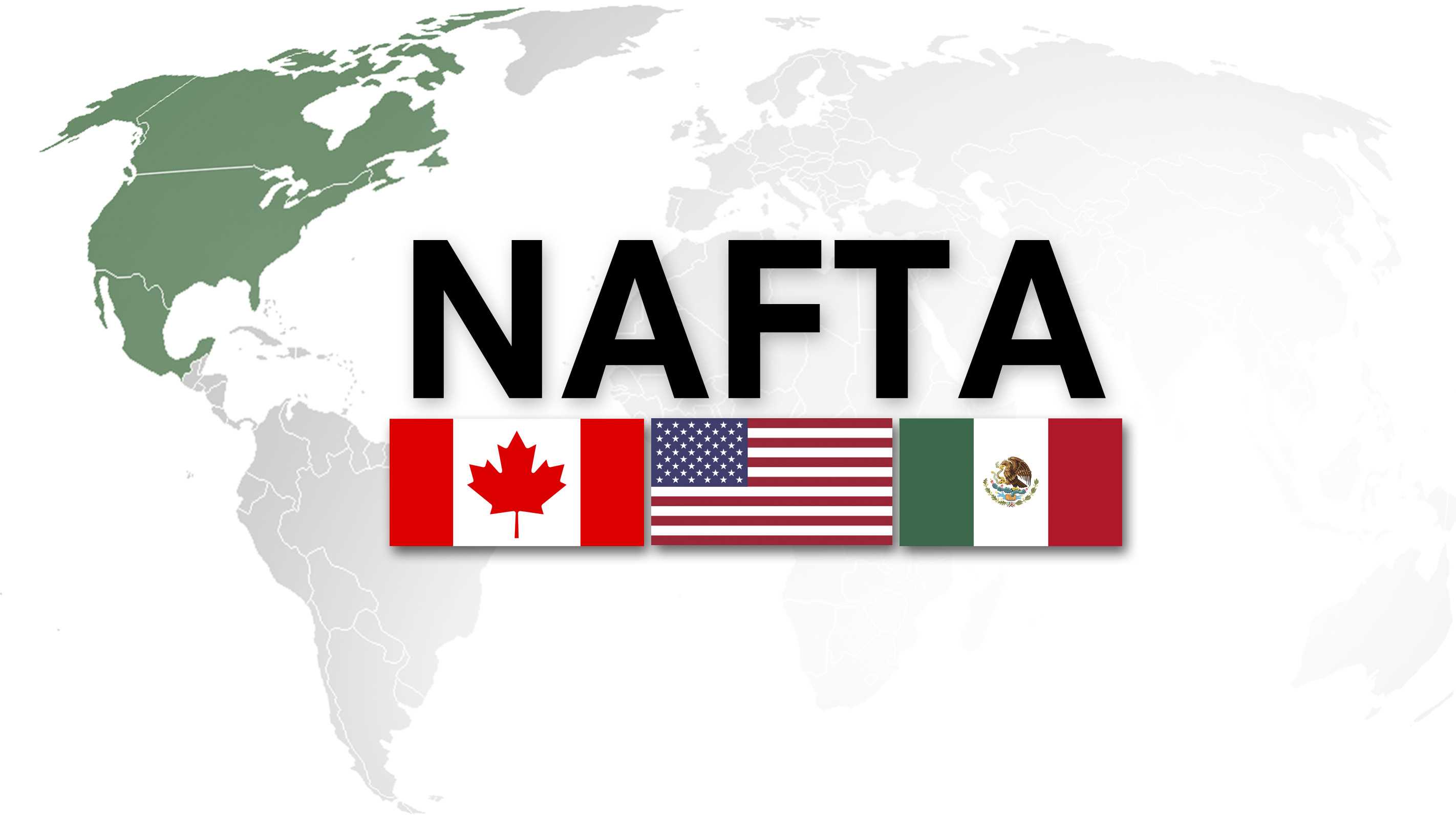
Challenges and Criticisms of NAFTA
Despite its benefits, NAFTA has also faced several challenges and criticisms, including: Job losses: Some critics argue that NAFTA has led to job losses in industries such as manufacturing, as companies have moved production to Mexico to take advantage of lower labor costs. Environmental and labor concerns: Some critics argue that NAFTA has led to environmental degradation and labor exploitation in Mexico, as companies have taken advantage of lax regulations.
Impact of NAFTA on the US, Canada, and Mexico
NAFTA has had a significant impact on the economies of the three participating countries. The US, Canada, and Mexico have become each other's largest trading partners, with trade among the three countries increasing significantly since the agreement came into effect.